Mulching is often an overlooked step in tree care, but its importance cannot be overstated. We believe that proper mulching is one of the easiest and most beneficial things you can do to support the health and longevity of your trees. Whether you are a homeowner, property manager, or business owner, understanding the importance of mulching around trees can help you create a thriving landscape.
Mulching involves laying a protective layer of material, such as wood chips, bark, or compost, around the base of a tree. While it may seem like a purely aesthetic choice, mulching provides a host of practical benefits to trees. One of the primary advantages is moisture retention. Mulch acts as a barrier, reducing water evaporation from the soil and keeping the root zone consistently moist. This is especially vital during hot summer months or periods of drought, when trees are at risk of dehydration. By conserving moisture, mulch reduces the frequency of watering and helps trees establish strong, deep roots.
Another significant benefit of mulching is weed suppression. Weeds can compete with trees for water, nutrients, and sunlight, often to the detriment of young or newly planted trees. A two- to four-inch layer of mulch prevents sunlight from reaching weed seeds, reducing their ability to germinate. This, in turn, minimizes the need for herbicides and manual weeding, both of which can disturb tree roots if not done carefully. Weed suppression not only improves the appearance of your landscape but also creates a healthier growing environment for your trees.
Temperature regulation is another key reason to mulch around trees. Mulch acts as an insulating blanket, protecting tree roots from extreme temperature fluctuations. During hot weather, mulch shields roots from intense heat, keeping the soil cooler and reducing stress on the tree. In colder months, mulch helps maintain a more consistent soil temperature, preventing the freeze-thaw cycles that can damage roots and disrupt a tree’s growth. Stable soil temperatures support consistent, healthy growth year-round.
Other Advantages of Using Organic Mulches Around Trees

Nutrient enrichment is a further advantage of organic mulches. As materials like wood chips, bark, or leaves decompose, they slowly release nutrients back into the soil. This natural process enriches the soil, improving its structure, fertility, and ability to retain moisture. Decomposing mulch also encourages beneficial soil organisms, such as earthworms and microbes, which contribute to a healthy and productive soil ecosystem. Over time, this results in stronger, more resilient trees that are better equipped to resist pests and diseases.
Soil erosion is a common issue in both residential and commercial landscapes, especially on slopes or in areas with heavy rainfall. Mulch plays a crucial role in preventing soil erosion by protecting the soil surface from raindrop impact and slowing runoff. This helps keep the soil in place, maintains soil structure, and ensures that tree roots remain covered and protected. Preventing soil erosion is essential for the long-term stability and health of trees, as exposed roots can dry out, become damaged, or lose their ability to absorb nutrients.
Mulch also offers valuable protection from lawn equipment. Lawn mowers and string trimmers are among the most common causes of accidental tree injuries in managed landscapes. When mulch is applied in a wide ring around the base of a tree, it creates a buffer zone that discourages mowing and trimming too close to the trunk. This barrier significantly reduces the risk of bark injuries, which can leave trees vulnerable to disease, insect infestations, and decay.
What is Volcano Mulching, and Should You Avoid it
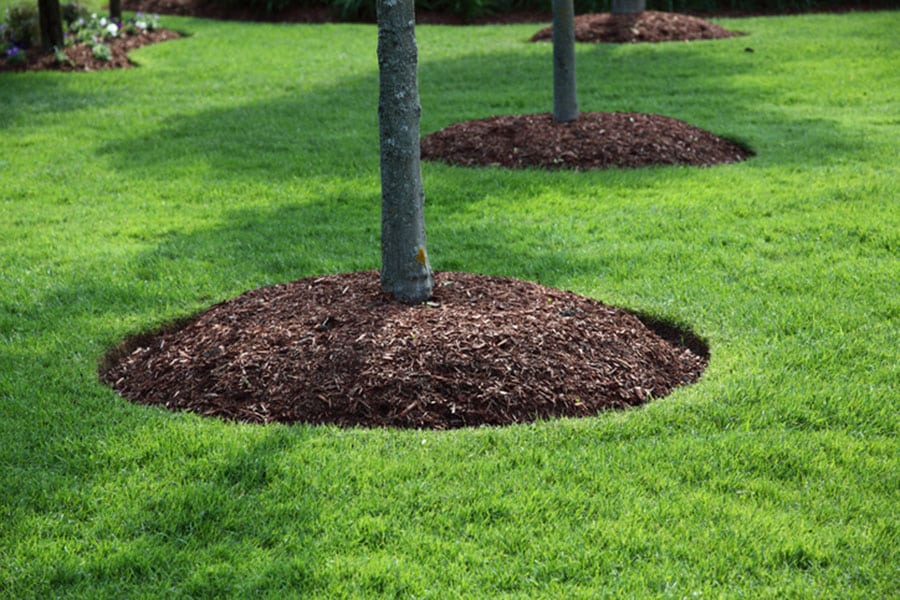
While the benefits of mulching are substantial, it is important to follow best practices to maximize results and avoid unintended harm. Mulch should never be piled directly against the trunk of a tree, a common mistake known as “volcano mulching.” This practice traps moisture against the bark, leading to rot, disease, and pest problems. Instead, mulch should be spread in a flat, even layer two to four inches deep, leaving a few inches of space around the trunk. Extending the mulch out to the tree’s drip line (the edge of the branches) is ideal, as it covers the area where most of the tree’s roots are located.
It is best to use organic mulches, such as shredded bark, wood chips, or composted leaves. These materials break down over time, adding nutrients to the soil and supporting soil life. Inorganic mulches, such as rubber or gravel, do not provide these benefits and can even cause issues with water runoff or soil compaction. Mulch should be refreshed annually, as it decomposes and can become compacted or thin.
Proper mulching is a cost-effective investment in the health, beauty, and longevity of your trees. At [Your Tree Service Company Name], we recommend making mulching a regular part of your tree care routine. If you need guidance on the best mulch for your property, help with application, or a comprehensive tree care plan, our experienced team is here to assist. Healthy trees enhance your property’s value, appearance, and ecosystem. By taking the simple step of mulching around your trees, you are giving them the best possible start for years of growth and enjoyment.