Tree Service in Huntington Woods MI. Emergency Tree Service and More
Tree service in Huntington Woods, MI, requires more than routine cutting. Local trees face storm stress, compacted soils, deadwood, canopy imbalance, and hidden decay, all of which can affect safety and long-term health.
Certified arborists, Oakland County tree service evaluate structure, disease indicators, root exposure, and clearance needs before recommending pruning, removal, stump work, or recovery care.
For careful assessment and dependable tree care, Metro Detroit Tree & Firewood can help determine the right approach, especially when subtle warning signs are not obvious from the ground.
Main Takeaways
- Tree service in Huntington Woods includes pruning, removal, storm damage response, stump grinding, and health assessments.
- Professional assessment is recommended for deadwood, canopy imbalance, exposed roots, signs of disease, or storm-related cracking.
- Proper trimming uses selective cuts, clearance pruning, and branch-collar cuts to support tree structure and recovery.
- Tree removal may be safest for dead, unstable, severely diseased, storm-damaged, or poorly placed trees.
- Reliable crews protect property with rigging, drop zones, equipment planning, cleanup details, and transparent estimates.
When Your Huntington Woods Tree Needs Professional Help
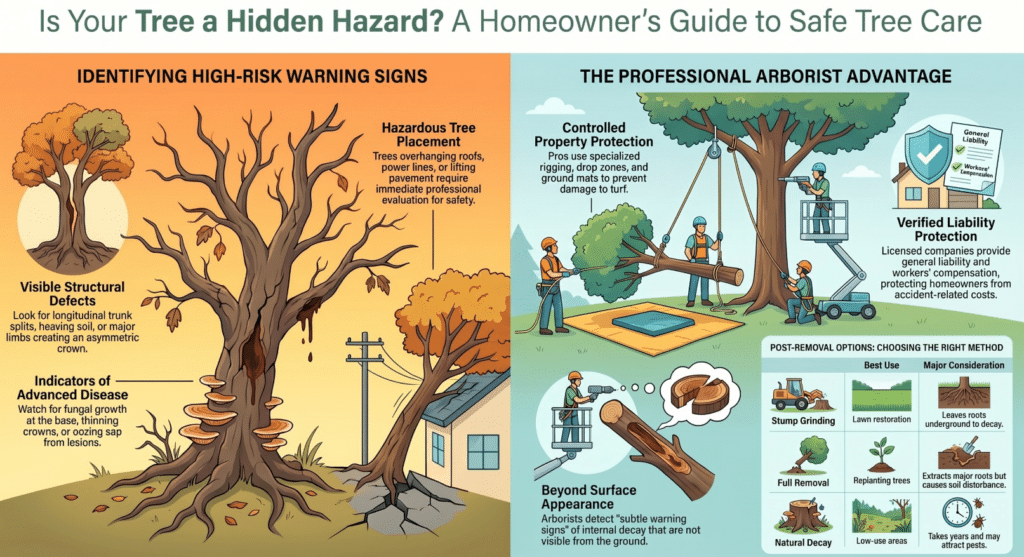
Although many tree issues develop gradually, certain symptoms indicate the need for a professional assessment. In Huntington Woods, property owners often seek guidance when canopy imbalance, excessive deadwood, soil compaction, exposed roots, or storm-related cracking create uncertainty. A qualified arborist evaluates tree health by examining structure, site conditions, root stability, and load distribution, not by appearance alone.
Professional help is especially important when branches overhang roofs, sidewalks, driveways, or utility corridors. Structural defects can increase risk under wind, snow, or saturated-soil conditions. A systematic trunk inspection can identify cavities, including bark, splitting, previous injury, or mechanical damage that may affect stability. Assessment may also include pruning recommendations, cabling, bracing, root-zone care, or removal when preservation is no longer practical.
Timely evaluation supports neighborhood safety, protects shared streetscapes, and helps residents make informed decisions consistent with responsible property stewardship. Expert input reduces guesswork and promotes long-term tree management within the community.
Signs Your Huntington Woods Tree May Be Diseased
When disease affects a tree, early symptoms often appear in the canopy, bark, leaves, or root flare before structural decline becomes obvious. In Huntington Woods neighborhoods, careful observation helps residents protect shared streetscapes and private landscapes. Warning signs may include yellowing leaves outside normal seasonal change, premature leaf drop, thinning crowns, dead twigs, sunken bark lesions, oozing sap, or cracks around branch unions.
Fungal growth at the trunk base, on exposed roots, or along wounded bark can indicate that decay organisms are affecting the internal wood. Leaf spots, distorted new growth, and dieback may suggest vascular, bacterial, or foliar pathogens. Root-zone problems may appear as reduced vigor, sparse foliage, or mushrooms near the soil line. Because symptoms can overlap with drought, compaction, insect injury, or nutrient imbalance, diagnosis should consider site history, species susceptibility, and pattern of decline.
Prompt assessment supports healthier community trees and safer, more resilient properties. Follow-up monitoring documents progression and helps guide care decisions.
Tree Trimming in Huntington Woods
As trees mature in Huntington Woods, proper trimming helps manage canopy structure, clearance, light penetration, and long-term branch stability. Selective cuts reduce end weight, remove crossing limbs, and improve branch spacing so wind loads are distributed more evenly through the crown. For neighborhood streets, sidewalks, roofs, and driveways, clearance pruning supports safe movement while preserving the tree’s natural form.
Professional trimming also protects property landscaping by controlling shade density, reducing limb interference, and maintaining balanced growth near turf, gardens, fences, and utility lines. Cut placement matters: pruning just outside the branch collar supports wound healing, while excessive topping can lead to weak regrowth and long-term defects.
Seasonal timing varies by species, growth rate, and condition, especially where flowering, fruiting, or pest pressure is relevant. In established yards, thoughtful canopy management can retain wildlife habitat, including nesting cover and food sources, while keeping shared residential spaces orderly, healthy, and visually connected.
When Tree Removal Is the Safer Choice in Huntington Woods
Tree removal becomes the safer choice when severe structural damage compromises load-bearing limbs or the main trunk. Trees affected by disease beyond treatment may pose risks of spread and progressive instability. Placement near structures, utilities, or sightlines that is dangerous can also require removal to reduce hazards.
Severe Structural Damage
Although corrective pruning can resolve many canopy defects, severe structural damage may leave a tree unable to distribute mechanical stress safely. In Huntington Woods neighborhoods, this condition can threaten shared streets, yards, and gathering spaces. A qualified arborist evaluates root stability, trunk integrity, and canopy balance during risk assessment to determine whether retention is reasonable.
Key removal indicators include:
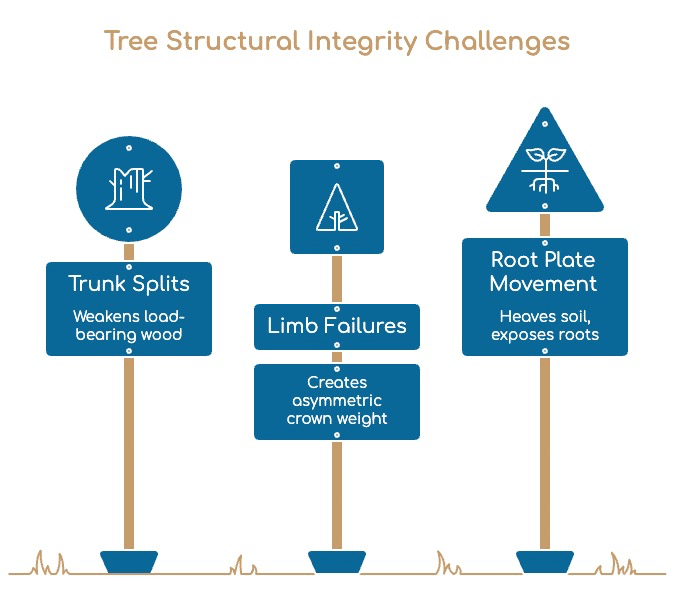
- Longitudinal trunk splits extending into load-bearing wood.
- Major scaffold limb failures leaving asymmetric crown weight.
- Root plate movement, heaving soil, or exposed structural roots.
When these defects align with occupied targets, safety planning often favors removal over repeated mitigation. This decision supports the wider landscape community by reducing the risk of predictable failure while enabling replacement planting to responsibly restore shade, continuity, and neighborhood character over time.
Disease Beyond Treatment
Structural failure is not the only condition that can make removal the safer option; advanced disease can also compromise a tree to the point of practical recovery. In Huntington Woods, arboricultural assessment may identify extensive cambial death, spreading cankers, vascular wilt, root rot, or severe crown dieback that no treatment can reliably reverse.
While pruning techniques can slow the spread of infections by removing diseased limbs and improving airflow, they cannot reverse systemic tissue loss or unstable root function. Likewise, fungal prevention ideas, including sanitation, mulch management, and moisture control, are most effective before decay becomes established. When disease threatens surrounding plantings or creates unpredictable decline, removal may protect the shared landscape.
A qualified tree service evaluates symptoms, pathogen behavior, and remaining health so property owners can make informed, community-minded decisions.
Dangerous Tree Placement
In some locations, a healthy tree can still pose an unacceptable risk when its placement conflicts with buildings, utilities, sightlines, or pedestrian areas. In Huntington Woods neighborhoods, removal may be the safer choice when pruning cannot maintain reliable clearance or structural stability.
Shared safety depends on recognizing placement risks before failures affect homes, sidewalks, or service lines.
- Roots lifting pavement, damaging foundations, or restricting drainage.
- Overgrown branches contacting roofs, conductors, signs, or street lighting.
- Canopies blocking driver visibility, walkways, or emergency access.
Qualified arborists evaluate lean, species growth rate, soil space, and deadwood hazards to determine whether retention is practical. When conflicts are permanent, removal reduces recurring maintenance, protects community infrastructure, and supports a safer, more connected residential environment for everyone.
Tree Removal in Huntington Woods, MI
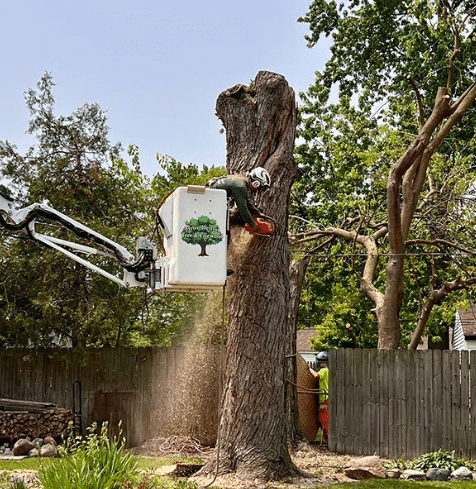
For properties in Huntington Woods, MI, tree removal is typically recommended when a tree is dead, structurally unstable, severely diseased, storm-damaged, or positioned where it threatens buildings, utilities, sidewalks, driveways, or adjacent trees.
Qualified crews assess trunk integrity, root plate stability, canopy weight, lean direction, and available rigging space before selecting felling, sectional dismantling, or crane-assisted removal.
| Evaluation Factor | Field Indicator | Removal Implication |
| Structural condition | Decay, cavities, cracks | Elevated failure probability |
| Site constraints | Fences, wires, garages | Controlled lowering required |
| Ecological value | Nests, wildlife habitat | Timing review recommended |
Responsible removal also considers neighborhood continuity: preserving healthy surrounding trees, limiting soil compaction, and coordinating access so residents remain informed and comfortable. When hazards are active but not weather-related, emergency scheduling may be appropriate to reduce exposure.
Stumps, debris processing, and replacement planting can be planned as part of a complete property-care strategy.
Huntington Woods Storm Damage and Emergency Tree Service
After severe wind, ice, or heavy rainfall, storm-damaged trees in Huntington Woods, MI, require prompt assessment to identify broken limbs, split unions, uprooted root plates, hanging branches, and pressure-loaded stems. Qualified crews evaluate structural risk before cutting, because unstable wood may shift when tension is released. This measured approach helps protect nearby homes, utilities, sidewalks, and shared neighborhood spaces.
Prompt storm assessment helps identify unstable tree hazards before cutting protects nearby homes, utilities, and shared spaces.
Emergency tree service typically prioritizes:
- Hazard isolation: securing the work zone and restricting access beneath suspended limbs.
- Load analysis: determining compression, tension, and lean before making reduction cuts.
- Selective removal: clearing failed branches while preserving viable canopy where structurally appropriate.
Follow-up care may include pruning wounds to proper branch collars, monitoring crown balance, and documenting defects for future seasonal care plans. Because storm stress can attract boring insects or expose decay, pest inspections may also be recommended. Coordinated response supports safer streets, resilient landscapes, and a well-cared-for community canopy.
Stump Grinding and Stump Removal Options
Once a damaged or unwanted tree has been removed, the remaining stump can affect soil use, turf recovery, replanting plans, and pedestrian safety. In Huntington Woods, stump treatment is typically selected according to stump diameter, root spread, soil conditions, and intended site reuse. Grinding reduces the stump below grade, leaving wood chips that may be removed or blended into backfill.
Full removal extracts the stump and major roots, creating a cleaner planting zone but greater soil disturbance. A dead stump may also decay naturally, though this can take years.
| Option | Best use | Major consideration |
| Stump grinding | Lawn restoration | Leaves roots underground |
| Full removal | Replanting trees | Requires backfill correction |
| Natural decay | Low-use areas | Slow decomposition |
| Chemical treatment | Limited access | Requires careful application |
Grinding alternatives should be evaluated with neighborhood site goals, so residents, managers, and arborists can align on safe, practical outcomes.
How Huntington Woods Arborists Prevent Property Damage
During tree work near homes, garages, fences, utilities, and landscape features, arborists prevent property damage through controlled planning, load assessment, and site protection. Each site is evaluated within a shared community environment, where careful work protects both individual properties and neighboring spaces.
Key protective methods include:
- Rigging limbs with ropes, pulleys, and friction devices to lower sections vertically instead of allowing free fall.
- Establishing drop zones, equipment paths, and ground protection mats to reduce impact on turf, pavement, irrigation, and planting beds.
- Inspecting trunks, unions, decay pockets, and canopy weight distribution before cuts are made.
Preventive pruning practices reduce future breakage by removing weak, crossing, or overextended branches before storms create uncontrolled failure. Tree root management also limits damage by guiding roots away from foundations, sidewalks, and underground utilities while preserving structural stability. Through measured cuts and coordinated ground support, arborists maintain safer properties.
Tree Service Costs in Huntington Woods
Because tree work varies by site conditions and risk level, tree service costs in Huntington Woods are typically determined by tree size, species, condition, access limitations, labor requirements, equipment needs, and disposal volume. Pricing also reflects whether crews must climb, rig limbs over structures, grind stumps, or process storm-damaged wood.
Accurate labor estimates help residents compare scopes consistently.
| Cost factors | Technical impact | Community relevance |
| Tree height and spread | More cuts, rigging, and handling time | Predictable planning |
| Site access | Larger equipment may be limited | Safer shared spaces |
| Debris volume | Hauling and disposal increase workload | Cleaner neighborhoods |
For routine pruning, smaller ornamentals generally require fewer crew hours than mature maples or oaks near roofs, fences, or utilities. Removals involving decay, lean, or confined backyards usually carry higher costs because additional control measures are needed. Written estimates should separate pruning, removal, stump work, hauling, and restoration so that households understand the value of the services.
Choosing a Licensed Huntington Woods Tree Care Company
When selecting a licensed tree care company in Huntington Woods, property owners should verify credentials, insurance coverage, and arboricultural qualifications before approving any work. A qualified provider supports neighborhood safety by applying accepted pruning standards, risk assessment methods, and site protection practices.
Licensed arborists vetting helps confirm that diagnosis, removal planning, and preservation work are directed by trained professionals.
Verify credentials, insurance, and arborist qualifications before hiring a licensed tree care company in Huntington Woods.
A practical Insurance verification checklist should include:
- Current general liability coverage for property damage and third-party injury.
- Workers’ compensation coverage for all field crew members.
- Valid municipal or state licensing aligned with tree service operations.
Documentation should be reviewed before scheduling service, not after equipment arrives. Reputable companies provide certificates directly from the insurer, identify supervising arborists, and follow ANSI A300 and Z133 standards where applicable. This diligence helps residents choose providers who respect shared streets, adjacent homes, and the long-term urban canopy that defines Huntington Woods.
Questions to Ask a Huntington Woods Tree Company
Before hiring a tree company, property owners should verify that the company is licensed and insured to ensure regulatory compliance and liability protection. Questions about service experience help assess technical capability for pruning, removal, disease management, and emergency work. Cleanup procedures and the pricing structure should also be clarified to define the project scope, disposal responsibilities, and the total cost.
Licensing And Insurance
For tree service in Huntington Woods, licensing and insurance verification should be treated as a baseline risk-control step rather than a formality. A reputable provider should present documentation before work begins, allowing property owners to participate confidently in a shared standard of responsible care.
Licensing helps ensure compliance with local requirements, while insurance protects against liability for injuries, property damage, or equipment incidents. These checks also support Safety compliance and adherence to industry standards.
Key questions include:
- Is the company properly licensed for tree work in the applicable jurisdiction?
- Can it provide current certificates for general liability and workers’ compensation?
- Do certificate names, dates, and coverage limits match the proposed work?
Clear documentation creates accountability and helps the community maintain safer, more reliable service expectations.
Service Experience
In evaluating tree service, service experience helps determine whether a company has the practical judgment, equipment familiarity, and site-management discipline needed for safe work in Huntington Woods. Property owners may ask how long the crew has handled pruning, removals, storm damage, cabling, and disease-related assessments in comparable residential settings.
Experienced providers should explain how they evaluate species, lean, decay, canopy load, utilities, structures, and access limits before selecting methods. They should also describe crew training, supervision, communication protocols, and a safety-first approach that protects workers, residents, neighboring properties, and shared community spaces.
Consistent customer satisfaction often reflects dependable scheduling, accurate risk recognition, and respectful coordination with homeowners. A qualified company can cite relevant local conditions and explain why its procedures fit Huntington Woods sites without exaggeration or vague claims.
Cleanup And Pricing
When comparing written estimates, property owners should ask exactly what cleanup tasks are included and how pricing is calculated.
Clear scope language helps neighbors evaluate proposals consistently and avoid surprise charges after pruning, removal, or lot clearing work.
- Confirm whether crews remove limbs, logs, sawdust, stump grindings, and other yard debris.
- Ask if hauling, disposal fees, equipment access, and restoration of disturbed areas are priced separately.
- Request unit pricing for added work, such as extra load removal or additional brush processing.
A reliable tree company should explain labor, equipment, disposal, and risk factors in measurable terms. Transparent cleanup standards support orderly properties, safer shared boundaries, and confidence among residents seeking dependable Tree Service Huntington Woods MI. Written details also create fair comparisons between contractors.
How to Prepare Your Yard for Service
Before a tree service crew arrives, the yard should be cleared of movable obstacles that could interfere with equipment access, debris handling, or the establishment of safe work zones. Patio furniture, toys, planters, grills, garden tools, hoses, and vehicles should be relocated outside the work area. Gates should be opened, pets secured indoors, and fragile landscape features identified. Homeowners should schedule site access with enough room for chippers, lifts, loaders, or hauling vehicles, including driveway clearance when needed.
It is also important to communicate obstacles before work begins. Underground irrigation lines, septic components, low-voltage lighting, buried cables, narrow side yards, soft soil, and overhead utility lines can affect equipment placement and cutting methods. Clear communication helps the crew protect property while maintaining efficient workflow. Neighboring access concerns, shared fences, and parking limitations should be addressed in advance. Proper preparation supports safer operations and helps the property owner remain an informed part of the service process.
Professional tree service in Huntington Woods, MI, from Metro Detroit Tree & Firewood supports safer properties, healthier canopies, and better long-term landscape performance.
Proper evaluation identifies disease, structural weakness, storm damage, and root-zone concerns before failure occurs.
Qualified crews apply pruning, removal, stump management, and cleanup methods based on tree condition, site access, and risk level.
By selecting licensed arborists and preparing the yard in advance, homeowners can improve service efficiency while protecting surrounding structures, soil, turf, and remaining trees.
Call Us Now: 568-625-3398
Get Your FREE Quote Now From Our Tree Service In Huntington Woods MI
To get a free quote by our owner on Wednesdays, Saturdays, or Sundays, contact us today at (586) 625-3398.
- Tree Service in Beverly Hills MI
- Tree Service in Royal Oak MI
- Tree Service in Hazel Park MI
- Tree Service in Clawson MI
- Tree Service in Berkley MI
- Tree Service in Madison Heights MI
- Tree Service in Pleasant Ridge MI
- Tree Service in Oak Park MI
- Tree Service in Ferndale MI
- Tree Service in Troy MI
- Tree Service in Rochester MI
- Tree Service in Bloomfield Hills MI
- Tree Service in Southfield MI