Tree Service in New Haven MI. Emergency Tree Service and More
Tree service in New Haven, MI covers inspection, pruning, removal, stump grinding, and emergency storm response.
Local trees face wind, ice, saturated soil, and structural stress that can create risks near roofs, driveways, fences, and walkways.
A qualified tree service in Macomb County crew evaluates limb defects, trunk damage, root stability, and access limits before work begins.
The right service plan depends on the tree’s condition, site layout, and hazard level, which is why working with Metro Detroit Tree & Firewood can help guide your next decision.
Main Takeaways
- Tree service in New Haven, MI includes arborist inspections, pruning, crown thinning, deadwood removal, cabling, and bracing.
- Emergency tree service addresses storm damage, hanging limbs, split trunks, uprooted trees, and blocked access routes.
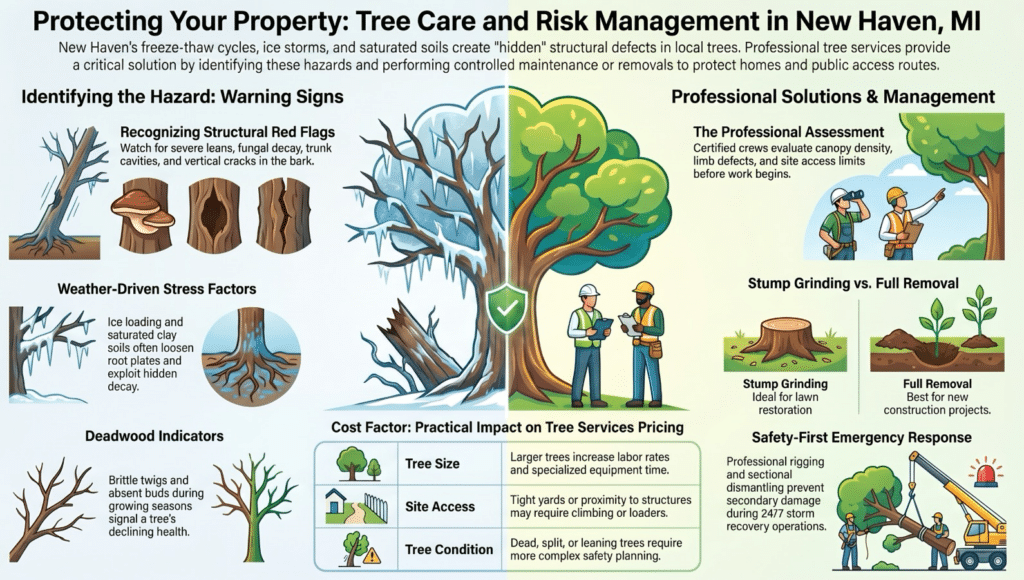
- Hazardous tree signs include severe lean, fungal decay, trunk cavities, dead branches, exposed roots, and vertical cracks.
- Controlled tree removal uses rigging systems, aerial lifts, chainsaws, grinders, and safe drop-zone planning.
- Stump grinding, brush chipping, debris hauling, and cleanup help restore safe, usable outdoor space.
What Tree Service in New Haven MI Includes
Tree service in New Haven, MI typically includes the assessment, maintenance, removal, and risk management of trees on residential, commercial, and municipal properties. Core work often begins with an arborist inspection to evaluate species, structure, canopy density, root exposure, decay, pests, disease, clearance, and site constraints. From that assessment, crews may perform pruning, crown thinning, deadwood removal, cabling, bracing, stump grinding, brush chipping, and controlled tree removal.
Maintenance services also address soil conditions, mulching, drainage concerns, and growth patterns that affect long-term tree stability. For neighborhoods, shared spaces, and business properties, coordinated seasonal cleanup helps manage fallen limbs, leaves, storm debris, and overgrowth while keeping outdoor areas orderly and usable.
Professional crews typically use rigging systems, aerial lifts, chainsaws, grinders, and debris-hauling equipment to complete work safely. The overall purpose is to preserve healthy trees, remove hazards, protect nearby structures, and support a well-maintained local landscape for everyone.

When to Call a New Haven MI Tree Service
A New Haven, MI tree service is typically needed when storm damage creates broken limbs, split trunks, or unstable root systems. Hazardous tree signs include severe lean, deadwood, fungal decay, trunk cavities, and hanging branches near structures or utility lines. Prompt assessment helps determine whether pruning, cabling, or removal is required to reduce property and safety risks.
Storm Damage Risks
After severe weather, storm damage risks often appear as split limbs, cracked trunks, exposed roots, hanging branches, or trees leaning toward homes, driveways, utility lines, and public walkways. In New Haven, MI, coordinated tree service response helps neighborhoods recover safely after seasonal wind damage while reducing secondary property loss.
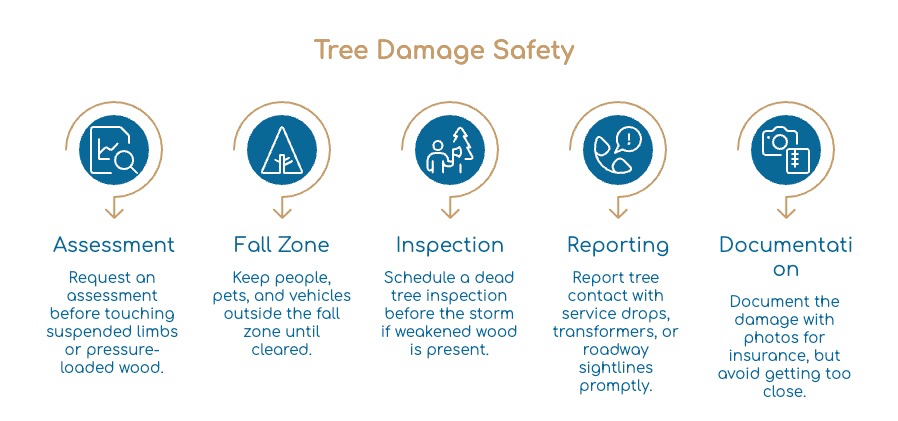
- Request an assessment before touching suspended limbs or pressure-loaded wood.
- Keep people, pets, and vehicles outside the fall zone until cleared.
- Schedule a dead tree inspection before the storm if weakened wood is present.
- Report tree contact with service drops, transformers, or roadway sightlines promptly.
- Document the damage with photos for insurance, but avoid getting too close.
A qualified crew evaluates load direction, access constraints, rigging needs, and removal sequence, giving residents practical guidance and a shared sense of safety after storms.
Hazardous Tree Signs
Sometimes hazardous tree signs develop gradually, including canopy dieback, fungal growth at the root flare, vertical trunk cracks, hollow cavities, lifting soil, included bark, heavy dead limbs, or a sudden lean toward structures and access routes. In New Haven neighborhoods, these conditions warrant prompt evaluation by qualified tree service personnel. Dead branch indicators include brittle twigs, peeling bark, absent buds, and limbs that fail to leaf out while adjacent growth remains vigorous.
Leaning tree symptoms may include fresh soil heave, exposed roots, cracked pavement, or a widening of the trunk base gap after wind or saturation. Residents share responsibility for safe yards, sidewalks, and drives, so suspect trees should be isolated until assessed. A professional can determine whether pruning, cabling, monitoring, or removal is appropriate based on the defect location, load, species, and target risk.
How New Haven Weather Creates Tree Hazards
Because New Haven, MI, experiences freeze-thaw cycles, heavy spring rain, summer wind gusts, and winter ice loading, local trees can develop structural defects that are not always visible from the ground. Soil expansion and contraction can loosen root plates, while saturated clay soils reduce anchorage during storms.
Ice storms add abnormal weight, weakening branches at old wounds, including bark, or decay pockets. Wind gusts then exploit these weak points, increasing the risk of limbs falling near homes, sidewalks, and shared neighborhood spaces.
- Freeze-thaw movement can widen trunk cracks and root-zone gaps.
- Heavy rain may leave roots unstable in softened soil.
- Ice accumulation can overload lateral limbs and upper crowns.
- Sudden wind pressure can twist stems with hidden decay.
- Repeated weather stress can convert minor defects into urgent hazards.
Recognizing these weather-driven patterns helps New Haven property owners protect their families, neighbors, vehicles, and community gathering areas before conditions worsen.
Tree Trimming in New Haven MI
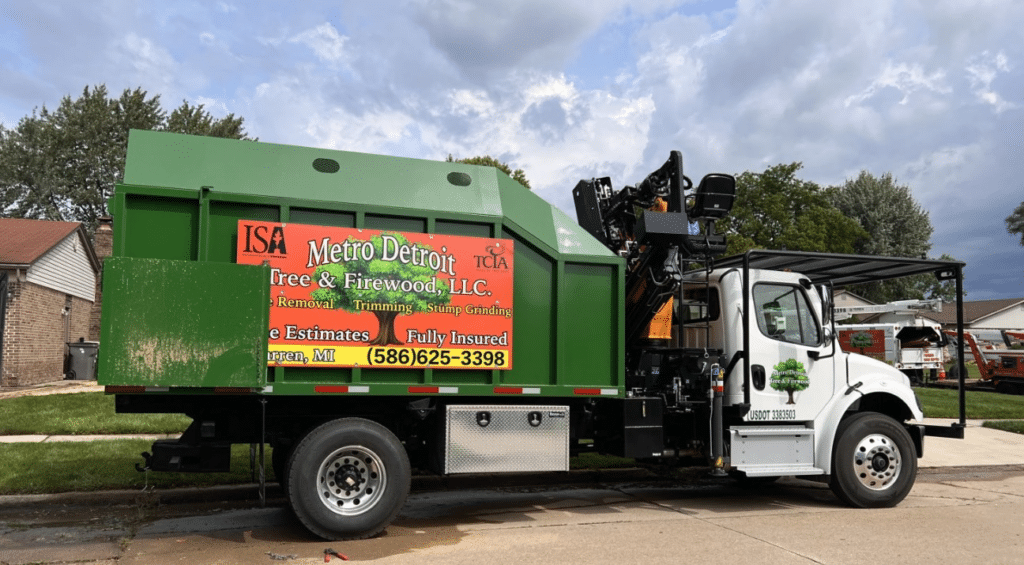
For properties in New Haven, MI, tree trimming is a targeted maintenance practice used to reduce structural risk, improve clearance, and support healthy crown development. In residential streets, shared driveways, and neighborhood lots, trimming helps maintain safe separation from roofs, siding, service lines, fences, sidewalks, and sightlines. Crews typically remove low, crossing, storm-damaged, or overextended limbs while preserving the tree’s natural form and load balance.
Seasonal trimming is commonly scheduled around local growth patterns, storm exposure, and property use, allowing homeowners’ associations, businesses, and residents to keep outdoor spaces orderly and accessible. Before work begins, safety inspections identify weak attachments, hanging branches, signs of decay, and conflicts with nearby structures or utilities.
Proper cuts, controlled rigging, and debris management reduce disturbance to surrounding yards and adjacent properties. For New Haven communities, consistent trimming supports a safer, cleaner, and more connected landscape without unnecessary removal. It also helps preserve neighborhood character and usable outdoor space year-round.
New Haven, MI Tree Pruning for Healthier Local Trees
While trimming often addresses clearance and structure, tree pruning focuses more directly on plant recovery, long-term stability, and disease prevention. In New Haven, MI, proper cuts help trees recover wounds, redirect energy, and maintain structural health through changing lake-influenced weather patterns.
Qualified crews assess species, age, canopy density, branch unions, and visible stress before recommending seasonal pruning.
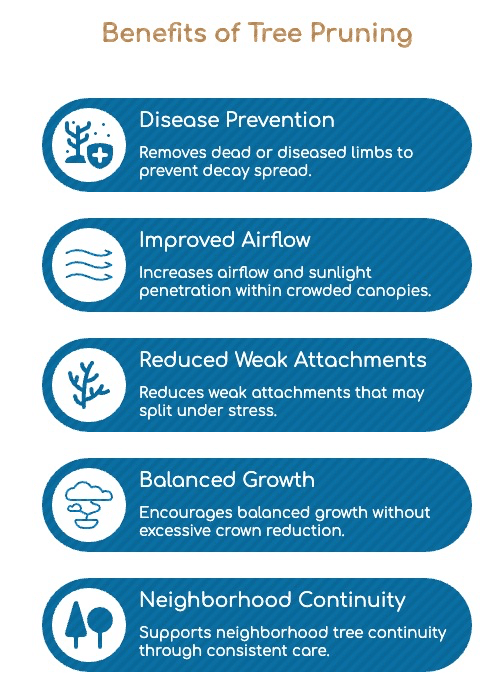
- Removes dead, diseased, or crossing limbs before decay spreads.
- Improves airflow and sunlight penetration within crowded canopies.
- Reduces weak attachments that may split under wind, snow, or ice.
- Encourages balanced growth without excessive crown reduction.
- Supports neighborhood tree continuity through consistent care standards.
Pruning is most effective when cuts are made outside the branch collar, using sanitized equipment and species-appropriate timing. Over-pruning can weaken reserves, expose bark, and stimulate unstable shoots. For local properties, a measured pruning plan preserves shade, improves resilience, and helps each tree remain part of the shared landscape.
Tree Removal in New Haven MI
When a tree becomes structurally unsound, severely diseased, storm-damaged, or incompatible with nearby utilities or structures, removal may be the safest management option. In New Haven, MI, proper tree removal begins with a site assessment, defect identification, a lean analysis, and an evaluation of targets such as homes, fences, sidewalks, driveways, and service lines. Qualified crews determine whether sectional dismantling, controlled rigging, or felling is appropriate for the property.
A practical removal plan protects surrounding turf, planting beds, and shared neighborhood spaces while reducing disruption for residents. Stump height, wood disposal, and debris handling should be defined before work begins, especially when removal is paired with Seasonal cleanup. In some cases, prior canopy shaping on nearby trees improves clearance and limits incidental branch damage during equipment access.
Professional removal supports long-term landscape planning by eliminating hazardous material and creating space for replacement trees selected for site conditions, mature size, and community character.
Emergency Tree Service in New Haven MI
Emergency tree service in New Haven, MI, addresses storm damage, unstable limbs, and trees posing immediate risks to structures, utilities, or access routes. Crews assess site hazards, perform controlled removal of hazardous trees, and reduce secondary damage where conditions allow. 24/7 emergency support helps property owners secure rapid response during severe weather events or sudden tree failures.
Storm Damage Response
After severe weather passes through New Haven, MI, storm damage response typically begins with a site hazard assessment to identify downed limbs, split trunks, uprooted trees, blocked access points, and contact with utility lines. Crews document priorities, isolate unsafe zones, and coordinate access so households, neighbors, and property managers understand the next safe steps in unison.
- Verify utility clearance before any cutting or debris movement.
- Establish traffic, driveway, and entryway control for safe passage.
- Sort branches, brush, and trunk sections for efficient removal.
- Apply fallen limb prevention practices by noting weakened hangers.
- Use emergency cleanup planning to stage equipment and disposal routes.
This organized response reduces secondary damage, supports community recovery, and keeps cleanup aligned with site conditions, weather changes, and municipal guidance without rushing unsafe work.
Hazardous Tree Removal
During hazardous tree removal in New Haven, MI, crews first determine whether the tree presents immediate risks from structural failure, root plate instability, storm cracking, lean progression, or interference with structures, roads, or utility corridors. Assessment includes canopy weight, trunk defects, dead limb distribution, soil displacement, and safe rigging access. Technicians establish drop zones, traffic separation, and controlled cutting sequences to protect nearby residents, workers, and shared property.
When removal is required, sections are lowered using ropes, blocks, loaders, or cranes based on clearance and load behavior. Stumps and debris are managed to restore safe use of the site. Local prevention tips include monitoring new cracks, fungal growth, hanging limbs, and sudden soil heaving after weather events. Prompt reporting helps neighborhoods reduce avoidable hazards before failure occurs.
24/7 Emergency Support
When a tree failure threatens access, structures, or utility corridors, 24/7 emergency support in New Haven, MI, focuses on rapid site evaluation, hazard isolation, and controlled stabilization. Crews assess hangers, split stems, wind-thrown branches, and indicators of root damage before selecting rigging, cutting, or temporary exclusion methods. This coordinated response helps neighbors regain safe movement while protecting shared property lines and service routes.
- Immediate dispatch prioritizes blocked driveways, road edges, and occupied structures.
- Hazard zones are marked to keep families, pets, and bystanders outside impact areas.
- Technicians document lean, soil heave, cracked unions, and suspended limbs.
- Controlled sectioning reduces load without transferring force into fences, roofs, or wires.
- Final cleanup restores usable space and supports a safer, connected neighborhood after storm events.

New Haven MI Stump Grinding vs. Full Stump Removal
For New Haven property owners, the choice between stump grinding and full stump removal depends on site conditions, future land use, and the extent of root interference. Stump grinding reduces the visible stump to mulch below grade while leaving most roots to decay naturally. Stump grinding benefits include lower disturbance, faster completion, reduced hauling, and easier lawn restoration where structures, utilities, or mature plantings are nearby.
Full stump removal extracts the stump and major root mass, creating a larger excavation but eliminating material that could obstruct grading, trenching, or new construction. In a stump removal comparison, grinding is typically suited to yards returning to turf or landscape beds, while stump removal is better suited to driveways, foundations, replanting in the same location, or drainage corrections.
Both methods improve safety and appearance, helping neighborhoods maintain orderly, usable outdoor spaces. Selection should account for soil access, equipment clearance, root spread, and the property’s shared standard for long-term care.
How to Choose a New Haven Tree Company
After stump decisions are made, selecting the right tree company determines whether the work is completed safely, legally, and with minimal impact on the site. A dependable New Haven provider should combine field experience with documented standards, so residents feel protected and aligned with a competent local crew.
Choosing a qualified local tree company helps ensure safe, compliant work with careful protection for property and neighbors.
- Confirm Licensed arborist credentials for pruning, removals, cabling, and hazard assessment.
- Request insurance and bonding verification before equipment enters the property.
- Review written work scopes, including access routes, rigging methods, debris handling, and site protection.
- Check local references, response practices, and familiarity with New Haven ordinances.
- Evaluate communication: clear scheduling, documented permissions, and crew identification support neighborhood confidence.
The preferred company inspects the tree structure, surrounding utilities, soil conditions, and nearby buildings before recommending action. It should use appropriate personal protective equipment, maintain machinery, and controlled lowering techniques when space is limited. Careful selection helps property owners share safe, orderly outdoor spaces with the wider community.
Tree Service Costs in New Haven MI
Across New Haven, MI properties, tree service costs depend on measurable site and work factors rather than a flat standard rate. Crews typically price work based on tree height, trunk diameter, canopy spread, access limitations, equipment needs, debris volume, and risk of exposure near structures or utilities.
| Cost Component | Practical Impact |
| Tree size | Larger trees increase labor rates and equipment time |
| Site access | Tight yards may require compact loaders or climbing |
| Condition | Dead, split, or leaning trees raise safety planning needs |
| Disposal volume | More brush and wood increase hauling costs |
| Timing | Seasonal pricing may shift with storm demand or dormancy |
Common Budget factors include permitting needs, stump grinding, crane support, and cleanup level. The estimating process usually involves visual inspection, work scope notes, and written pricing so that neighbors can compare options fairly. Transparent labor rates and itemized tasks help New Haven homeowners plan with confidence under a shared local service standard.
Preparing for Your New Haven Tree Service Visit
Before a New Haven tree service crew arrives, the property owner should clear access routes, move vehicles, secure pets, and remove portable items near the work zone. Good preparation supports efficient rigging, chipper placement, and debris flow while helping the neighborhood maintain a safe worksite.
- Identify underground utilities, irrigation heads, septic lids, and low-voltage lighting before equipment is brought in.
- Mark trees approved for pruning, removal, or seasonal cleanup with visible tape or confirmed work orders.
- Keep children, visitors, and pets indoors or outside the exclusion zone during cutting and hauling.
- Unfasten gates, note tight turns, and provide driveway or curbside staging space for trucks.
- Discuss disposal preferences, including chips, logs, stump grindings, and final rake-out expectations.
After setup, the crew can verify hazards, review the scope, and begin work with less interruption. Clear communication helps every nearby household feel informed, respected, and part of an orderly service visit.
Tree service in New Haven, MI supports property safety, tree health, and site functionality through inspection, pruning, removal, stump grinding, debris handling, and emergency response.
Proper assessment helps identify structural weakness, storm damage, disease, and clearance risks before failure occurs. Qualified crews use controlled cutting, rigging, chipping, and disposal methods to reduce hazards around homes, driveways, utilities, and walkways.
Choosing an experienced local provider like Metro Detroit Tree & Firewood ensures efficient work, appropriate equipment, and safer long-term landscape management.
Get Your FREE Quote Now From Our Tree Service In New Haven MI
To get a free quote by our owner on Wednesdays, Saturdays, or Sundays, contact us today at (586) 625-3398.
- Tree Service in Warren MI
- Tree Service in Roseville MI
- Tree Service in Fraser MI
- Tree Service in Utica MI
- Tree Service in Sterling Heights MI
- Tree Service in St. Clair Shores MI
- Tree Service in Macomb Township MI
- Tree Service in Harper Woods MI
- Tree Service Washington Township MI
- Tree Service in Shelby Township MI
- Tree Service in Richmond MI
- Tree Service in Clinton Township MI
- Tree Service in Chesterfield MI
- Tree Service in Romeo MI
- Tree Service in Harrison Township MI
- Tree Service in New Baltimore MI